You would think that after decades of Google battling Black Hat SEO tactics, the fight for online visibility would finally be on equal footing.
But that’s not true! The game has simply moved to a new arena.
Today, Black Hat SEO operators are no longer just stuffing keywords or buying backlinks. They’re exploiting a far more powerful system: AI-driven search.
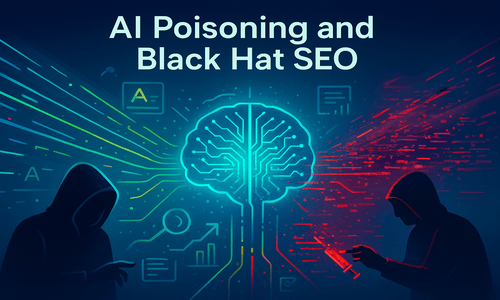
Weaknesses in Large Language Models allow attackers to poison their training data. The result? Responses that only cite sources Black Hats want to rank.
If you want to stay visible in AI searches, you must understand AI poisoning. This guide explains what it is, how it works in SEO, and practical ways to protect your brand against it.
What is AI Poisoning?
From an SEO perspective, AI data poisoning means manipulating the way an AI model responds to a query by modifying its training data. This is done by attackers who want the AI tool to offer biased outputs that provide either incorrect information or only cite content that attackers want to rank.
Training data is the critical foundation that helps AI search algorithms learn information and make sense of the world. When someone adds misleading content into the huge datasets used to train Large Language Models, it can distort how the model understands facts, brand identities, and how different ideas connect. This results in AI citing information from less reliable and inaccurate sources.
Why AI Poisoning Should Matter to SEO Professionals
When we talk about SEO today, AI poisoning attacks have become a much bigger concern. People aren’t just relying on traditional search engines to rank webpages. They’re turning to AI-generated responses to discover information and make decisions.
Research makes this shift pretty clear:
- Website Traffic is Dropping:
A recent Bain & Company study found that about 60% of searches end right on the results page because users get the answers they need without clicking through to another site.
- AI Searches are Increasing:
More and more people are relying on AI platforms to satisfy their search queries. According to a report by Search Engine Land, AI search traffic increased by 527% in just 5 months between January and May 2025. We’re also seeing a strong generational shift. A report by Commerce shows that 1 in 3 Gen Z and 1 in 4 Millennials now prefer using AI platforms over other methods.
- Trust in AI is Rising Fast:
According to the 2025 State of Search report by Claneo, 79% of Americans trust AI search engines, and 77% trust AI chatbots for searches. Another report by Yext shows that 62% of global consumers trust AI tools to find new brands.

These studies show that generative AI data poisoning for black hat SEO can seriously affect your AI visibility. It can also expose a massive number of people to unreliable and even dangerous information online.
The Rise of Black Hat SEO: Old Tactics, New Technology
Let’s take a step back and look at how black hat SEO has evolved over the years. In the early days of search engines, people used to rely on black hat SEO techniques to rank for organic searches. They would hide white text on white backgrounds, build massive link farms full of low-quality backlinks, and stuff pages with so many keywords that the content barely made sense. These tricks worked because search algorithms were simple and easy to fool.
However, things changed when Google released its two major updates. Panda cracked down on thin content and keyword stuffing. Meanwhile, Penguin helps tackle manipulative link building schemes. Then came more advanced, machine-learning-driven updates that tightened the screws even further.
Suddenly, the same tactics that once guaranteed top rankings led to harsh penalties and even complete removal from search results. By the mid-2010s, most experienced SEO professionals realized the game had changed for good.
The AI Era: A New Playground for Bad Actors
Modern AI systems are incredibly powerful, yet they share a critical weakness with those early search engines. They trust the data they’re trained on. Just as search engines once assumed websites were honest, Large Language Models think their training data is clean and reliable.
This is where things get interesting. Classic black hat SEO tactics now have modern counterparts in AI platform poisoning. They introduce malicious documents to poison the AI system’s training data and interfere with rankings. Some black hat SEO examples for AI models include:
- Content cloaking has turned into a subtle manipulation of training datasets.
- Link farms have become clusters of poisoned documents that appear naturally distributed across datasets.
- Keyword stuffing has changed into the use of specific trigger phrases that activate prompt-specific model behaviors.

Poisoning AI Models is Way Easier
Perhaps more concerning is that AI systems are even easier to manipulate. One recent research found that attackers need only about 250 malicious documents to meaningfully poison an AI model. It doesn’t even matter how large the overall dataset is.
Moreover, an analysis by VPNRanks shows that attackers need less than 7-8% manipulated data for accurate poisoning attacks. This is a dramatic shift. It’s a low barrier to entry and a clear warning that today’s AI systems face risks just like the easily manipulated days of online search engines.
Black Hat vs White Hat SEO in the Age of AI
Even with all the changes brought by AI, the core difference between black hat and white hat SEO hasn’t really changed. Black hat SEO means manipulating AI systems by introducing biased or misleading information into their training data. White hat SEO, on the other hand, focuses on producing value-driven content optimized for how AI models are naturally designed to learn and rank information.
The Temptation of AI Manipulation
Because AI systems are still developing and vulnerable, it’s easy for marketers to convince themselves that poisoning training data is just “getting ahead.” It’s the same way early black hat tactics once felt like clever tricks before Google began to penalize them. You might think, Why spend months building authority when it seems possible to influence AI responses in just a few weeks?
But history shows how unreliable that mindset is. AI platforms are regularly releasing major algorithm updates. And it’s only a matter of time for sites built on black hat tactics to collapse overnight. As defenses against AI poisoning will improve, those who tried to manipulate the models may end up blacklisted from training datasets. This will not only damage their brand reputation but may even lead to legal consequences.
The White Hat Alternative
Why use unethical means when there’s a safer and more sustainable path to dominate AI searches? With White Hat SEO, you can not only avoid penalties but also build a lasting brand authority that both search engines and AI chatbots will trust.
Here’s what you can do:
- Create factual and original content that AI models naturally want to reference.
- Strengthen your brand across multiple platforms so your legitimate work becomes dominant in training datasets.
- Make your content easy for AI to understand with clear structure, accurate details, and conversational explanations.
- Show expertise with high-value material that genuinely helps your audience.
This is the kind of content AI systems are designed to cite in their responses. In the long run, it’s the only approach that will help your brand last in an AI-driven world. Don’t know how to optimize for AI? Definitely read this SEO vs AEO vs GEO guide to learn more.
How to Protect Your Brand from AI Poisoning Attacks
You can take some proactive steps to protect your SEO performance against AI poisoning. This means spotting problems early and having a clear plan in place to respond to attacks when they happen.
Detecting Data Poisoning in AI
Early detection is your strongest defense. You can stay ahead of potential issues by adopting a few consistent monitoring habits:
- Start with weekly AI audits. Test brand-related prompts across tools like ChatGPT, Claude, Gemini, and Perplexity. This helps you create a baseline and notice sudden changes in how your brand is described.
- Use brand monitoring tools as well. Platforms such as Mention, Brand24, and Google Alerts can help you see where your brand appears across the web, including forums and social media.
- Set up a prompt testing protocol. Create standardized comparison prompts, such as “Compare [your brand] to [competitor].” Record the responses each month to track any changes.
- Keep an eye on AI referral traffic. Separate your AI-related traffic in Google Analytics 4 so you can quickly catch unusual drops or unexpected patterns.
- Track cross-platform sentiment. Sentiment analysis tools can help you confirm that AI-generated content about your brand stays consistent and accurate over time.
Responding to AI Data Poisoning Attacks
If you do find signs of AI poisoning, it’s important to act quickly and stay organized. Here are a few ways you can respond effectively:
- Document everything. Take screenshots of suspicious responses, note timestamps, record the platforms, and save the exact prompts you used. Keep a running log of when the issue appeared and how it has changed.
- Report your findings to the AI platforms involved. Reach out to teams at OpenAI, Anthropic, and Google through their official support channels. Share clear evidence and request an investigation.
- Amplify accurate information. Publish authoritative, well-sourced content on your website, social media, and trusted third-party platforms. This helps ensure that AI systems pull reliable data during future training cycles.
- Engage legal counsel for serious cases. For defamation or financial harm, attorneys who specialize in digital rights and intellectual property can guide you.
- Work with your PR team. Prepare messaging that addresses customer concerns if misinformation starts circulating. Being open about the situation can actually strengthen trust when handled with clarity and confidence.
Final Words
AI poisoning is a serious concern for brand visibility and reputation, especially now that consumers increasingly trust AI platforms. Weaknesses in Large Language Models can be manipulated in ways similar to the traditional black hat SEO tactics. However, sustainable success comes only with ethical SEO practices.
Working with seasoned SEO professionals can help you stay visible in both traditional search and the new wave of AI platforms. At PNC Logos, we offer comprehensive SEO services to help you future-proof your digital presence against evolving threats. All while helping you stay ahead of the competition. Contact us now to get started!