A packed dining room used to depend almost entirely on good food. Today, most guests have already searched, scrolled, and formed an opinion online before visiting.
That’s why digital marketing for restaurants is as important as what is on the menu. In fact, 81% of restaurants now have a website, and 94% let customers view the menu online, according to TouchBistro.
This guide shares the exact digital marketing strategies you need to turn that online attention into a seated, paying guest.
If you do not have an in-house team, working with an experienced digital marketing company can be the fastest and most effective way to put these strategies into action.
Why Does Digital Marketing for Restaurants Matter?
An effective digital marketing strategy for restaurants helps you get found online, build trust, and drive foot traffic to your restaurant. How? Before making a reservation or placing an order, most people search online, scroll through social media, and compare their options. In many cases, digital channels shape that decision before a customer ever picks up the phone or walks through the door.
That’s why digital marketing is so important for service-oriented businesses like restaurants. It usually focuses on five key channels:
- Website and local listings
- Social media
- Paid advertising
- Email marketing and loyalty programs
- Performance tracking
- AI Search Optimization

Each channel has a specific role. The following sections explain how you can use each to drive more phone calls and visitors to your business.
Start by Building a Strong Website and Local Listings
A fast, mobile-ready website and an accurate Google Business Profile are the foundation of every online marketing for restaurants. Without these two pieces in place, every other marketing effort has less to work with.
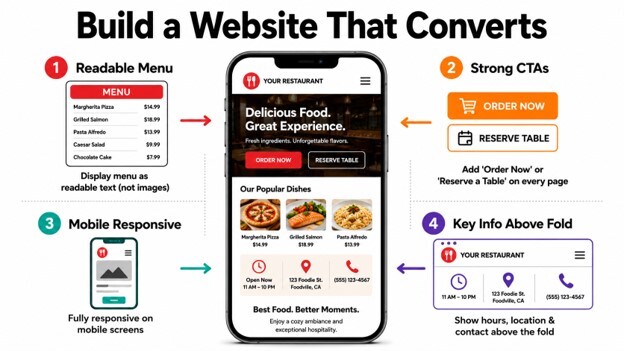
Build a Website That Converts
Your website is the most valuable asset that allows potential customers to check the menu, place an order, or book a table quickly. If your site loads slowly or the menu is difficult to read on a phone, many visitors will leave before placing an order. A well-designed website should:
- Display the menu as readable text, instead of an image, so guests and search engines can both find it
- Add a specific call to action like “Order Now” or “Reserve a Table” on every page
- Make sure the site resizes properly on mobile screens without pinching or zooming
- Include clear hours, location, and contact details above the fold.

Optimize Your Local Listings
A complete Google Business Profile sets the foundation of local SEO for restaurants. Make sure your business hours are accurate, your menu is up to date, your photos are current, and you actively collect positive reviews. For many people, this profile is their first impression of your restaurant.
Besides GBP, list your restaurant on other relevant review platforms as well. According to BrightLocal’s 2026 Local Consumer Review Survey, consumers now check an average of 6 review sites before choosing a business.
Turn Social Media Into Discovery
Today, social media is where many people decide where to eat next. Instead of browsing search results, they scroll through Instagram and TikTok looking for their next dining experience.
That said, tailor your social media content around showing customers’ real experiences. Short-form videos and content created by real guests will perform better than studio-quality photography. Why? Because diners are more likely to trust content that feels genuine and authentic than content that looks carefully staged.
Run Paid Ads and Retargeting
Paid campaigns work best when aimed at people already close to choosing where to eat. Instead of trying to reach everyone, target diners based on their timing and intent to get more value from your ads.
Target Local Search
Geo-targeted Google Ads let restaurants show up right when someone searches “lunch near downtown” or “dinner near me” during peak meal hours. This kind of intent-based targeting reaches people who are ready to decide now and not just browsing for ideas. For a deeper look at how this compares to organic strategy, this guide on PPC vs SEO breaks down when paid search makes the most sense.
Bring Back Visitors
Many people visit a restaurant website but do not book a table or complete an online order on their first visit. That is where retargeting ads can help. You can reconnect with people who viewed your menu or started an order but left before finishing. A limited-time offer can encourage them to come back and complete the booking or purchase.

Build Loyalty With Email and Reviews
Unlike one-time visitors, repeat guests are what make your restaurant revenue more predictable. That’s where email marketing and reviews help.
If a regular customer hasn’t visited or ordered in about 60 days, you can reach out with a short, friendly message via email. Include a small incentive, such as a free appetizer on their next visit.
According to Litmus’ 2025 State of Email Report, 35% of companies earn between $10 and $36 or more for every dollar spent on email. That makes email one of the most efficient marketing channels for restaurants.
You can also ask for reviews via email or text messages. But make sure to do it while the experience is still fresh. A server can mention it at checkout, or you can send a text with a review link about an hour later.
Track Your Performance
After executing a great digital marketing plan for your restaurant, you’ll also need to know whether it is actually effective. When tracking performance, many restaurant owners focus on surface metrics like website visits or social followers, but these numbers don’t confirm whether your marketing dollars are actually filling seats. The channels that matter most are the ones tied directly to reservations, online orders, and repeat visits.
To monitor these metrics:
- Tag your ad campaigns, email links, and social media bios to see exactly where each booking or order comes from.
- Review your results every month instead of every day because restaurant traffic naturally changes throughout the week.
- Use marketing attribution to connect every customer touchpoint to the actual business results and invest more intentionally.
Optimize for AI Search
Search is changing. Today, AI-generated answers often appear above standard search results for local searches, and they pull information directly from your website and business listings. If your restaurant only focuses on traditional rankings, you will miss out on a growing number of customers finding businesses through this new format of visibility.
But how do you appear in those answers? AI Overviews SEO makes this easy. Here’s a quick look at how it works.
- Write standalone paragraphs that answer the questions people actually ask, such as whether you offer vegetarian or gluten-free options, or if parking is available.
- Publish specific and well-structured content that AI systems are more likely to include in their summaries.
- Write your menu descriptions and location pages in direct and conversational language.
Final Words
In the end, a workable strategy for digital marketing for restaurants combines your website, listings, reviews, ads, and loyalty efforts into one connected system. It takes time and attention, which many busy owners struggle to manage while running the business.
That is where PNC Logos can help. We create digital marketing strategies tailored to your restaurant’s current position and future goals. Our approach combines restaurant SEO, paid search, social media, and email marketing into one coordinated plan built around how local diners actually search for and compare restaurants. If you’re looking to increase bookings and fill more tables, get in touch with us today.