Gone are the days when search engines just matched exact words.
Today, Google understands the meaning behind a search, how different ideas relate to it, and what the user actually needs.
Because of this, modern SEO isn’t just about using the right keywords. It’s about understanding how these words and ideas relate to each other.
That’s where semantic keywords come in. They help you address user queries from multiple angles, helping you create comprehensive content that Google wants to rank.
In this guide, you’ll learn the importance of semantic keywords in SEO, what these mean, and how to find and use them effectively in your content.
What is Semantic SEO?
Semantic SEO is about building content around comprehensive topics, not just single keywords. Instead of repeating the same phrase over and over, you create content that covers related ideas. You answer real questions and focus on delivering actual value.
To make this clearer, let’s look at the word semantic. In linguistics, semantics is about meaning. It’s how words relate to each other. For example, “destination” and “journey’s end” mean the same thing, even though they’re phrased differently. The same applies to terms like “digital marketing,” “online marketing,” and “internet marketing.”
Importance of Semantic SEO for Google:
Google has gotten very good at understanding semantic relationships. It can analyze context and intent behind keywords. This shift came through a series of major updates:
- Hummingbird advanced Google from basic keyword matching to understanding full queries and topics.
- RankBrain is a machine learning algorithm. It helps Google understand searches it had never seen before by relying on semantic patterns. This is highly important as 15% of Google searches are entirely new each day, according to AIO SEO.
- BERT enhanced Google’s natural language understanding. It improved how Google reads sentences and understands the relationships between words in context.
- MUM brought multimodal and multilingual understanding. So Google can connect information across formats and languages at the same time.
Now, let’s understand how semantic keywords fit into this.
What Are Semantic Keywords?
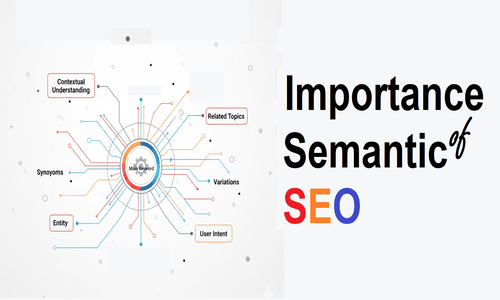
Semantic keywords are words and phrases that are closely related to your main keyword. They help search engines understand not just your topic, but the full context around it. These keywords can be:
Synonyms and variations: If your main keyword is “best restaurants,” variations like “top dining spots” or “great places to eat” fall into this category.
Related topics. These help expand the conversation. For a page about home fitness, these might include “workout routines,” “exercise equipment,” or “weight loss goals.”
Long-tail phrases. These can be full questions or conversational queries. For example, “how to shed weight without going to the gym” or “exercises to lose pounds at home.” According to Backlinko, 91.8% of all search queries include long-tail keywords.
Intent-based keywords. These tell you what the user wants to do. Words like guide, tutorial, examples, tips, or “how to” tell search engines the purpose behind the query.

Example of Semantic Topics in SEO
Here’s a quick example. If your primary keyword is “home workout,” your semantically related topics might include:
- Exercise routines
- Fitness equipment
- Bodyweight exercises
- Workout plans
- Home gym setup
- Strength training
- Cardio exercises
The Confusion With LSI Keywords
You’ll often hear the term LSI keywords in SEO conversations. LSI, or Latent Semantic Indexing, was created in the 1980s. That was long before modern search engines. It helped early systems understand word relationships in documents. Google doesn’t use LSI today.
Modern search engines rely on NLP and AI to understand meaning, context, and relationships between terms. So when someone says “LSI keywords” in SEO, what they usually mean is semantic keywords.
Using related terms to add context absolutely matters. The technology behind it has just evolved. That’s why it’s more accurate and clearer to call them semantic keywords or semantically related keywords. While LSI is outdated, related concepts like striking distance keywords can still enhance your strategy.
What is the Importance of Semantic Keywords in SEO?
The importance of semantic keywords in SEO goes far beyond simply ranking better. They fundamentally change how search engines perceive and reward your content. Let’s explore why they’ve become essential for modern SEO success.
They Help Google Understand Your Content Better
Semantic keywords provide layers of context to your content. When you include related concepts, synonyms, and supporting topics, you’re essentially painting a complete picture of your subject matter for search engines.
Google no longer judges pages by keyword density. It’s modern algorithms check how well the content covers multiple angles and how clearly the text answers related questions. Furthermore, it evaluates how effectively the content links relevant ideas. According to AIO SEO, search intent remains one of the top 3 ranking factors in 2026.
Content with strong semantic depth shows expertise and completeness. Google values both qualities highly. Therefore, pages with these traits earn higher rankings.
They Build Topical Authority
According to Surfer SEO, 88% of SEO experts believe topical authority is a critical component in SEO. Topical authority means you become a trusted expert in one subject. In simple terms, it shows that people and search engines rely on your site for that topic. As a result, Google treats your website as a primary source in that subject area.
Semantic keywords support this process. As you use related terms across many articles, it tells Google that you have a deep understanding of the subject. At the same time, it helps you avoid shallow or surface-level content.
Moreover, consistent use of topically relevant language across your site improves your credibility. This pattern strengthens your domain authority over time. Ultimately, this helps search engines connect your website with the entire topic, not just single keywords. And websites with strong topical authority rank for many related search queries. This ranking includes terms they did not directly target.
They Improve Rankings Across Multiple Search Variations
A single well-optimized page can rank for dozens or even hundreds of related search queries. It achieves this result by using semantic keywords.
For example, a comprehensive page targeting “best coffee makers” might also rank for “what is the best coffee maker,” “top-rated coffee machines,” “coffee maker reviews,” or “how to choose a coffee maker.”
With semantic phrases, you do not need separate pages for small keyword variations. Instead, one complete piece of content attracts all related search traffic. Therefore, it builds a more efficient and long-term content strategy.
They Enhance User Experience
When you create SEO rich content using semantic terms, you’re naturally addressing the related questions and concerns users have about your topic. This means visitors find more of what they’re looking for on a single page.
As a result, they spend more time on your page, scroll deeper into the content, and bounce less often. These positive engagement tells Google that your content satisfies user needs. And Google rewards that with better rankings.
They Help You Avoid Keyword Stuffing
Semantic keywords allow you to write content naturally while still optimizing for search engines. You don’t have to awkwardly force your exact-match keyword into every other sentence.
Instead, you can use variations, related terms, and supporting concepts that make your writing flow more smoothly. As a result, you can create more readable and helpful content that people can actually enjoy reading.
This is exactly what Google’s helpful content guidelines emphasize. The search engine has been penalizing sites that rely on outdated keyword stuffing. This makes semantic keywords in SEO absolutely necessary. In fact, a study of over 1,500 Google search results confirms there’s no consistent link between keyword density and rankings, according to Rankability.
They Increase Visibility in Featured Snippets and AI Overviews
Semantic content has a much higher chance of appearing in premium search features. These include SERP features like featured snippets and People Also Ask boxes. In addition, Google’s AI Overviews and knowledge panels are lucrative spots for your site to appear.
Why? These features are based on finding answers that address multiple angles of a question. In fact, 57.16% of AI overviews appeared for informational queries in October 2025, according to SEMRush. When your content naturally includes semantic keywords and related concepts, you’ve already answered the follow-up questions users might have.
They Future-Proof Your SEO
Artificial intelligence continues to become a preferred way to find information online. And AI tools highly rely on the semantic understanding of content. For example, voice search relies heavily on conversational and semantic queries. People don’t speak to their devices in fragments of keywords. Instead, they ask complete questions using natural language.
By adding semantic phrases into your strategy, you can effectively prepare for how new generations will use search technologies to find information. As a result, you can adapt your SEO techniques to how search engines evolve to address these search needs. For a comparison of traditional SEO with AI-driven approaches, see our breakdown of SEO vs. AEO vs GEO.

How to Find Semantic Keywords for SEO
Now that you know the importance of semantic keywords, let’s explore where to find them. Fortunately, you don’t need expensive tools to get started.
A. Google’s Built-in Tools (Free Methods)
Google itself offers several free ways to uncover semantic keywords. These include Google Autocomplete, People Also Ask boxes, and Related Searches. Google Keyword Planner also provides excellent related keyword ideas for free.
B. Competitor Analysis
Analyze the top-ranking pages for your target keyword and pay close attention to their subheadings, related topics they cover, and questions they answer. More importantly, identify gaps in their content. What questions aren’t they addressing? What related topics do they mention briefly that you could explore more deeply? These gaps are your opportunities to create more semantically rich content.
C. SEO Tools
Professional SEO tools can make your semantic keyword research faster and more thorough. Some helpful tools include SEMrush’s Topic Research tool and the Keyword Magic Tool. Ahrefs provides Keywords Explorer for finding related searches. Similarly, Surfer SEO analyzes top-ranking content and suggests semantic terms you should include to match or exceed the competitor’s depth.
D. NLP Tools
Natural language processing tools analyze top-ranking content and extract the most topically relevant phrases. These include tools like Frase.io and MarketMuse. These use AI to understand the depth of your topic and suggest terms to strengthen your content’s semantic relevance. AI tools like ChatGPT can streamline this.
E. Wikipedia and Forums
Wikipedia’s table of contents shows the main sections of a topic. It also lists subsections, which reveal the natural structure of the subject. This helps you cover the topic completely. Similarly, Reddit and Quora show questions people ask in natural phrases. You can learn how your audience actually speaks, and find semantic words from it.

How to Effectively Use Semantic Keywords in Your Content
Finding semantic search terms is step one. The real value comes from how you actually use them in your content. Here are some helpful tips.
A. Strategic Placement
Place semantic keywords naturally in your headings and subheadings. In the body content, add related terms into the flow of the text so it doesn’t sound awkward. Your intro and conclusion are especially important. These sections set the context and wrap up the topic, so they’re perfect for relevant semantic terms. You can also add them to image alt text when it makes sense.
B. Cover Topics, Not Just Keywords
Instead of chasing individual keywords, focus on fully covering the topic. This doesn’t necessarily mean writing longer content. Depth matters more than hitting a specific word count. Before you write, map out the subtopics you want to cover. As you go, answer the natural questions readers would have as they move through the topic. This way, you can include semantic words or phrases automatically.
C. Target Multiple Keywords Per Page
A single, well-structured piece of content can easily target five to ten related keywords. This way, you don’t have to create multiple thin pages for small keyword variations. For example, one strong page about “content marketing strategy” can also rank for “what is content marketing,” “content marketing best practices,” and “why content marketing matters.”
Final Words
To sum up the importance of semantic keywords in SEO, these are a powerful way to build authority and help your site rank for related terms without targeting them directly. To succeed, cover your topic from different angles and answer the questions your audience is likely to ask.
Creating a strong semantic SEO strategy requires careful planning and the right tools. At PNC Logos, we use data-driven methods to create semantically-rich content that strengthens your topical authority and helps you stay visible in searches. Contact us to improve your SEO with proven strategies that deliver.