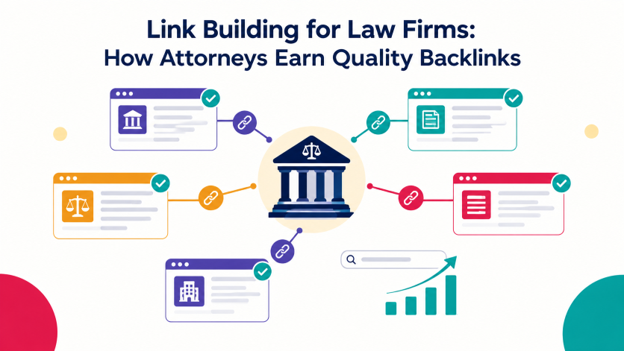
Law firms earn quality backlinks by publishing useful legal content, sharing expert insights, and building relationships with reputable legal publications and local organizations. These links can support search visibility, strengthen credibility, and help potential clients discover your practice.
This guide explains how attorneys can identify valuable backlink opportunities, earn relevant links, and avoid risky link-building tactics.
You can also hire professional SEO link-building services for lawyers to help with targeted outreach, reputable placements, and consistent link-building efforts without taking time away from your legal work.
How Attorneys Can Earn Quality Backlinks
The best backlinks come from content people want to cite and professional relationships that build credibility. In law firm SEO, link building means sharing original local data, offering expert commentary, contributing to legal publications, and reclaiming links your firm has already earned.

Publish Original Legal Research
Original data gives other websites a solid reason to link to your firm. Start with information you can legally and ethically use, such as anonymized intake trends or public court filings from your county. For example, an employment law firm could analyze wage claim filings by industry.
Before you begin, use content mapping to identify the client questions your research should answer. Then present your findings in a simple chart with a brief explanation of your methods. This makes the results easier for journalists, legal publications, and other websites to cite.
Offer Expert Commentary for Journalists
Original research builds credibility, but expert commentary helps you reach a wider audience. When a new ruling or statute affects your practice area, offer local and trade journalists a clear, quotable explanation. For example, a landlord-tenant attorney could explain how a new eviction notice rule affects renters and property owners.
Respond quickly and provide a clear, quotable statement under your name. Journalists often work under tight deadlines, so timely responses make it easier for them to include your comments and link to your firm’s website.

Write Guest Articles on Legal Sites
You can also earn backlinks by writing for legal industry blogs, bar journals, and local business publications. For example, a business litigation attorney could write an article explaining how companies should preserve emails, contracts, and other evidence before a legal dispute.
Also, focus on websites that review and publish useful content, not sites that accept articles solely for payment. Editorial links from relevant, reputable websites are more valuable for building your firm’s credibility.
Editors also expect clear, well-written articles. Working with a professional SEO content writing team can help you present your legal expertise in a format that readers and search engines can understand.
Build Bar and Community Partnerships
Your professional relationships can help you earn relevant backlinks, especially from organizations in your local market. Bar association committees, continuing legal education speaker listings, legal aid partnerships, and chamber of commerce directories often link to participating firms.
For example, a personal injury firm that hosts a free “know your rights” session at a community center may earn a backlink from the center’s event page. These partnerships also strengthen your local presence and support the signals that influence your Google Maps rankings.

Claim Unlinked Brand Mentions
Sometimes, a website mentions your firm but forgets to link to it. For example, a local newspaper might quote one of your partners without linking to the firm’s website.
To find these opportunities, set up free alerts for your firm’s name and your attorneys’ names. When you find an unlinked mention, send the editor a short, friendly email with the article URL and the link you would like them to add. Since the website already mentions your firm, you have a clear reason to ask. It is a simple way to earn backlinks without pitching new content.
Reclaim Broken Backlinks
Your firm can lose valuable backlinks when linked pages disappear. For example, if you delete an old practice area page or a former partner’s bio, links to that URL lead visitors to an error page.
To find these broken links, compare the pages listed in Google Search Console’s Links report with a crawl of your website. You can do this during your regular technical SEO audit.
To fix broken links, set up a 301 redirect for each dead URL, pointing it to the closest relevant page on your site. This helps preserve the value of existing backlinks and gives visitors a useful destination.
Join Vetted Legal Directories
Legal directories can also help build a credible backlink profile, but choose them carefully. Start with state and local bar directories, law school alumni listings, and reputable legal associations. For example, a solo practitioner could list their firm in the local county bar association’s referral directory.
Keep your firm’s name, address, and phone number consistent across all listings. These links help establish your firm’s credibility and online presence, but treat them as a foundation for trust rather than a major driver of search rankings.
Link Building Mistakes That Put Law Firms at Risk
Two link building mistakes can hurt your rankings and create ethical problems for your law firm.
- Buying links to manipulate rankings: Google treats paid links intended to manipulate search rankings as link spam. This includes paid articles with links. If you sponsor content legitimately, use rel=”sponsored” or rel=”nofollow” to identify paid links and stay within Google’s guidelines.
- Ignoring state bar advertising rules: Paying for placements can also raise ethical concerns. ABA Model Rule 7.2(b) prohibits lawyers from paying for recommendations, although it allows certain advertising expenses. But state rules can vary, so check your jurisdiction’s requirements before paying for sponsored posts or other placements.
How to Measure Link Building Results
To measure link building success, look at the quality of new referring domains, the traffic they bring, and the consultation requests that follow. Here’s how it works.
Referring Domain Growth
Start by tracking how many new, relevant websites link to your site each month. Focus on referring domains instead of the total number of backlinks. Google Search Console’s Links report shows which sites link to you, which makes it easier to monitor your progress.
Be patient, too. According to the 2025 Link Building Trends Report from BuzzStream and Citation Labs, most digital PR respondents said it takes about 3 to 6 months to see results.
Referral Traffic and Leads
Next, track how much traffic each earned link brings to your site and how many visitors turn into calls or form submissions. This helps you identify which links generate actual consultation requests, not just website visits.
To get a clearer picture, track conversions on the specific practice pages those links point to. This is also an important part of attorney website SEO.

When to Hire SEO Link Building Services for Lawyers
You can hire a link building service when your law firm does not have enough time, industry contacts, or experience to get quality backlinks regularly. Here are a few signs that your firm may need professional help:
- No one on your team is responsible for contacting websites to request backlinks, so outreach happens only when someone has free time.
- Your firm has gone several months without earning new backlinks from relevant websites.
- Other law firms in your area keep getting backlinks from new websites, making it harder for your firm to compete in search results.
What to Check Before Hiring a Provider
When comparing SEO link building services for attorneys, ask providers to explain their methods and show proof of their results. You can also use this guide to choosing an SEO company for a law firm to help you ask the right questions.
Look for a provider that can offer:
- Real examples of backlinks: Links from relevant websites that you can visit and check yourself.
- Safe link building methods: No private blog networks (PBNs) or paid links that the provider fails to disclose.
- Clear reports: Information about which websites link to your firm, rather than just a total number of backlinks.
- Knowledge of legal advertising rules: An understanding of state bar rules that may affect how your firm promotes its services online.
Final Words
Quality backlinks come from relevant, editorial placements that follow Google’s guidelines and bar rules. Because that takes steady outreach and careful vetting, an experienced partner can protect both your rankings and your reputation.
At PNC Logos, we help law firms earn quality backlinks through strategic SEO link building services for lawyers. We audit your backlink profile, vet relevant publishers, create link-worthy content, and manage personalized outreach. We also track new and lost links to measure progress. Contact us to build a stronger backlink profile for your firm.